An Ongoing Saga: Navigating the Challenges and Opportunities of Google PMAX Campaigns

People enjoyed my last post about PMAX (Nerds!) so I have composed an update to reflect the latest status as to how we are integrating this tactic into our biddable mix without losing control of performance.

As we dive deeper into Google’s Performance Max (PMAX) campaigns, we find ourselves navigating a landscape filled with both potential and pitfalls. Recently, we presented a comprehensive deck to both our internal team and our client, highlighting several concerns that emerged during our initial PMAX tests. These concerns are critical to address to ensure the effectiveness and efficiency of our campaigns. Here’s a rundown of the key issues we’ve identified:

Key Concerns with PMAX

Limited Adherence to Vendor Guidelines for Proof-Of-Execution: PMAX’s current structure restricts our ability to adhere to co-op advertising proof-of-execution guidelines, causing concerns about partner reimbursement.

Reduced Control Over Targeting and Messaging: The automation within PMAX limits our ability to finely tune targeting parameters and messaging strategies particularly regarding Core brand keywords. We work on behalf of a strong brand and want to ensure that we deliver the message that aligns with the persona of our customers and value propositions of our products.

Lack of Transparency in Placement Visibility: PMAX does not provide clear insights into where ads are being placed, making it challenging to optimize and ensure brand safety.

Cannibalization of Existing Tactics: The PMAX algorithm tends to cannibalize traffic from our established campaigns, reducing the effectiveness of our traditional search and shopping efforts while simultaneously boosting the effectiveness of PMAX.

Upon expressing these concerns to our Google support team, we were met with a swift response. However, the call was saturated with sales representatives eager to defend PMAX. This type of response is typically an indication that a tactic is tied to incentive packages. The discussion becomes complicated when your support team thinks that you might literally take money from their pockets.

A Loss of Efficiency and Control

At the time of our analysis, we have observed a loss in efficiency and control. Key metrics indicate:

Inefficient Reach: A 22% increase in CPM.

Decreased ROAS: A 16% reduction in return on ad spend.

PMAX prioritizes its algorithm over our carefully crafted shopping and text campaigns, leading to a significant shift in traffic. Our core brand keywords were being funneled into the PMAX experience, despite our efforts to implement exact match negatives. Close variants continued to be drawn into PMAX, undermining the efficiency of our campaigns.

Cannibalization and Misallocation

The PMAX system has a tendency to cannibalize traffic from existing search text campaigns, leading to inflated performance metrics. We observed a 116% period-over-period increase in revenue attributed to Shopping campaigns, while our text campaigns saw a 56% decrease. This shift, driven by PMAX’s auction priority and the broad match keyword list, resulted in higher ROAS and CPC for PMAX campaigns when compared to the prior PLA instance.

Moreover, PMAX appears to redistribute investment to new placements once the KPI goals are achieved. For example, if your ROAS target is $10 and you make a sale with $100 ROAS, PMAX will dilute this profit by spreading impressions across placements that are unlikely to convert a sale.  This arbitrage, aimed at normalizing new placements and conditioning transactional user behavior, is not acceptable when it impacts our budget efficiency.

Strategic Adjustments Moving Forward

Our goal is not to abandon PMAX but to refine its implementation to better align with our advertising objectives. To that end, I have directed my team to take the following steps:

  • Increase Control: We are manually adding close variants against top revenue-driving keywords to regain some control over targeting.
  • Control Brand Message: We are utilizing campaign-level negative lists to exclude brand terms and top revenue-driving terms from PMAX campaigns.
  • Increase Scale: PMAX will be incorporated as an extension of our traditional search and shopping activities to ensure a more holistic approach.

Stay tuned as we continue to refine our strategies and share our learnings from the ever-evolving landscape of PMAX campaigns.

PMAX: Hacking the new wave of blackbox AI ad solutions

Has anyone given thought or analysis to determining how much of your existing text keyword coverage is being picked up by PMAX? Given that PMAX is feed-based and uses AI/ML to determine ad relevance, I would think that the text experience is superior to PMAX particularly for Brand keywords. We want to put our best foot forward in market which, in my opinion, is the message created by marketers using brand value propositions rather than the message created by robots.

Our Google support team have said that text is the default placement served when their systems determine that a user query could be served by an advertiser’s text or PMAX campaign. However, our initial analyses indicate that this is not the case as we have seen aberrations in impression and click volume as well as anomalies in a PMAX placement reporting script we have been testing. PMAX is taking an increasingly larger share of our total budget.

I work with a major brand spending more than a million dollars a month and any small efficiency gain will have considerable impact on the bottom line. Here is what we will test in the coming quarter:

Negate Brand Keywords from PMAX – We have strong Brand recognition and see this as a simple way to cut back on the inflated costs of PMAX.

Utilize Standard Shopping as a Catch-All – This means running Standard Shopping in conjunction with PMAX with very low CPCs. The logic being that Standard Shopping will catch any brand traffic missed by PMAX at an efficient cost.

I’ll be sure to report back as to the effectiveness of this strategy but I am fairly confident in the logic

Stay funny in a world of robots: random notes about the stuff I have enjoyed lately

I thought this episode from The Current Podcast about the use of humor in advertising was cool (and very clever). Andrew Robertson is the guest and is responsible for the “You’re Not You When You’re Hungry” campaign for Snickers. The emergence of AI driven technology means that everything is becoming automated and robotic in our industry, but humor is distinctly human and might be a way to gain an edge on the competition. It’s certainly a way to get people to like you and we all know that likeability is a key component in success.

With that sentiment in mind, here are some other things I have enjoyed lately:

Jane Weaver – She’s a veteran musician from the UK who has been writing songs and playing music across a variety of genres for close to 30 years with her bands Kill Laura, and Misty Dixon (featuring the tragically departed Badly Drawn Boy collaborator Dave Tyack). Her recent solo material is incredible and I really love her last two albums. Unfortunately, I had a hard time finding physical copies in the United States but was able to eventually snag a copy of “Flock” from Octopus Records in Bushwick Brooklyn a few months back. Her latest album, “Love in Constant Spectacle” has proven even more difficult to find in the states but I was able to grab a copy from Elephant records in Winchester, England (there must be something about shops named after animals).

The NBA Playoffs. Go Celtics. Jrue Holliday is a menace.

I read Disco’s Out, Murder’s In: the True Story of Frank the Shank and L.A.’s Deadliest Punk Rock Gang by Heath Mattioli and David Spacone on on my recent trip to London after picking it up at my local book shop (which is also my local coffee shop – I love Topos). The book tells the allegedly true (but almost certainly fictionalized) story of a gang of punks in LA in the early 1980’s and the violence (and “murder”) they wreak on the surrounding area. This book had been in my Amazon cart about a year ago but never purchased. While flipping through the book at Topos I read about how their style was sent into a more aggressive and militant direction by listening to British bands like Criminal Class and the Strike. The same thing happened to me; streetpunk and pushups are a tantalizing combination for disenfranchised teenagers. It’s a fun read but you can tell fairly early that the narrator, Frank the Shank, is mostly full of shit. I have been told that none of the old heads in LA seem to know much about this crew (LMP – La Mirada Punks), and it seems improbable that a string of stabbings at every punk show in 1980s LA would have gone unnoticed by both the punk scene and the local news. Still, it’s a fun read.

Devin Haney vs Ryan Garcia – Garcia has irked me for years with his incessant internet bullshit. More recently, Haney has irked me with what I perceive as unwarranted arrogance. This fight is a perfect example of why I love boxing: it had bravado, drama, and exceptional skill from both combatants. I can’t wait to watch them do it again.

I saw Madness live for the first time at the Hammerstein Ballroom in Manhattan. They were one of my favorite bands when I was a tweenager, but chances to see them eluded me unless I traveled to London or Coachella. Thrilled to have finally caught them live, they were excellent.

Slow hiring in the biddable media industry

Digital advertising sits front and center of a transitional era. There’s a lot going on in the industry as companies seek to gain efficiency.

Google and Microsoft are the main culprits as they continue to push new automated tactics like broad match, PMAX, Demand Gen, Automatically Created Assets etc.

  • Broad Match – algorithmically matches your ad with searches that are relevant to your keyword, even if they don’t use the exact words. This allows for traffic volume with a smaller set of keywords.
  • Performance Max (PMAX) – Uses AI/ML to optimize ad delivery across all their advertising channels (text, shopping, display, Gmail, discovery, YouTube, etc) from a single campaign
  • Demand Gen – Google’s newest display advertising solution designed to generate engagement across channels from a single campaign.
  • Automatically Created Assets (ACAs) – the latest ad builder which helps advertisers automatically generate headlines and descriptions for their search ads based on the ad’s content and audience targeting.

These solutions are designed to be easy for advertisers to quickly create their campaigns. Since the all leverage automated machine learning, best practice dictates that account managers limit changes to the tactic. The platforms literally recommend a “set it and forget it” approach to account management (more on this later).

To cut costs, large agencies are increasingly turning to offshore support for tasks like pacing, reporting, and query monitoring, particularly in new business pitches where they’re deploying offshore talent at the execution level.

Finally, and perhaps most importantly, everyone is waiting to see what AI will bring to the industry. Technology (particularly in advertising) is advancing at an alarming rate which is causing decision makers to pause investment and wait for the dust to settle.

Many people have been lamenting all of this as the “death of the industry.” My POV is that advertising is cyclical and will come back around in due time as advertisers need a human decision makers placed firmly between the advertising platform and ad budget (don’t allow Google to hold your wallet for you).

We’re observing that management of all these black box tactics is being enhanced by our specialist teams. Tried-and-true strategies like tiering PMAX campaigns or employing Broad match alongside Exact match has further improved tactical performance.

What else has been going on?

I went to London last week for family reasons and spent some time working from my company’s London Office. As I always do when in London, I spent considerable time shopping or in the pub.

Chillin at Hampton Court

Afro Caribbean music is still huge in the UK and was pervasive throughout my record shop experiences. I had grabbed a few things in a shop called Banquet Records in Kingston upon Thames and, being somewhat out of my usual element while staying in the posh suburbs west of London, I asked the clerk what was cool in the area. Instead of recommending local venues and coffee shops as I had expected, the chap came back with a stack of records:

  • London Brew “London Brew” – British Jazz musicians performing music inspired by Miles Davis’s “Bitches Brew.” I’m probably not the core audience for this release.
  • William Onyeabor “Who is William Onyeabor?” – I am already familiar with his work thanks to the TV Series This is England and one ride to Connecticut in the Nothing tour van several years back.
  • Little Simz “No Thank You” – As a long standing judge of book covers, I chose not to purchase this album due to its release over a year ago, coupled with my lack of interest in the one track on the album that I was already familiar with (Gorilla). Immediately after leaving the shop I listened to the latest release from Simz, “Drop 7” and I have seen the light. My assumptions were incorrect and, having delved deeper into her catalog, I now know Simz is insanely incredible. She doesn’t have one style, she oscillates across a spectrum of genres and influences from hip-hop, reggae, jazz, electronic (particularly on this latest EP), and is particularly impressive in the way Simz threads elements from these genre’s together into brilliant songs. I am a convert. I love Little Simz.
  • Mogadisco (Dancing Mogadishu – Somalia 1972​-​1991) – This has been in heavy rotation singe I returned. I can’t wait to incorporate “Gobonimada Jira” by Bakaka Band into future reggae sets.
  • Doing it in Lagos (Boogie, Pop, and Disco in 1980’s Nigeria) – I love this. It reminds me of the Italian disco Chubby Charles played (the only CD he owned, so he claimed) as we drove through London in his car back in 2019.
  • Other purchases: Tenor Saw “Ring the Alarm”, Frank Carter and the Rattlesnakes “The Drugs“, Pete Doherty “Kolly Kibber“, the Stooges “Russia Melodia“, Gregory Isaacs “the Border“, and a plethora of Viz, Beano, Panini Euro Cup, Mojo and Peppa Pig books for my kids.

I went all the way to Long Island this weekend

It’s a snow day in New York City and both kids are home from school. The snow fell heavily until noon, but it it turned to rain. The current slushy streets and uncollected trash from Sunday means that the mess outside of my house is almost as vile as the mess my kids made in my living room today.

My dad visited this weekend to spend time with his grandchildren for the first time this year. I drove us out to Long Island to see if we could find any semblance of his maternal grandfather – my great grandfather, James Henderson Waugh. It was an utter failure.

The family relationship with James Waugh seems to be tenuous at best in the first place. He was a Teenage Captain in the RAF during WW1 who traveled to Canada after the war and entered the US illegally. Upon returning to Scotland, he had my Grandmother with his first wife, who unfortunately passed away at an early age from tuberculosis. This left my young grandmother in the care of family while Waugh returned to America with his secretary who he subsequently married. Accounts of him are consistently marked by alcoholism and instances of mistreatment or neglect toward his daughters, both in the United States and United Kingdom.

I packed the entire family into my car and drove to the area of Glen Cove Long Island where Roy Campanella had his catastrophic car accident in 1958. We knew that the site of this accident was close to the house Waugh owned. Not surprisingly this area does not look as it did when my father visited in the 1950s. We drove around some of the neighborhoods but nothing struck my father’s memory. It is entirely likely that the property Waugh once owned has been renovated or entirely rebuilt.

Next we went to Locust Valley Cemetery, armed with the plot number for James Waugh. Unfortunately, there were no signs to indicate the cemetery sections and no staff to provide guidance. I was frustrated with myself for my lack of preparation.

To kill some time outside of the car, we went to the Arboretum across the street from the graveyard. My kids quickly seized control of an area of the park labeled “the children’s habitat” by securing a tactical position in a tower made of wet plywood and tree limbs. I tried to search the the sliver of 5G service my phone was struggling to remain connected to for more information about the layout of Locust Valley Cemetery. Eventually, given the growing hunger within my travel party, we elected to leave.

We left quiet Glen Cove behind for the hustle and bustle of the parkways and thoroughfares of Mineola, Long Island. We enjoyed an entirely adequate hibachi dinner at Fyhre and also bought some records at Mr Cheapo. It was the perfect way to lift my frustration from our earlier misadventures.

My daughter has really been into buying records after receiving a small record player for her bedroom at Christmas.  She was directed by Mr. Cheapo himself to a Children’s Records section in the back of the store where she bought a Beauty and the Beast picture disc and Mickey Mouse Disco.

Here’s a quick rundown of my purchases:

Pagans – Shit Street: I was late to discover this band, but thanks to a recommendation from my friend Clevo via the 185 Miles South Podcast, I quickly caught up. This LP from 2000 serves as a solid collection of material from these often overlooked Cleveland Punk Pioneers.

Mike Bloomfield, Al Kooper, Steve Stills – Super Session: This was an immediate recommendation from my Dad as soon as we took a look through the first stack of LP’s in the shop. I didn’t know anything about this album but my dad gave me the low down and 10 minutes later, Mr. Cheapo saw the record in my hands and did the same. I was sonned from all angles by the old dudes in this shop and am now aware that Al Kooper (of Blood, Sweat, & Tears) discovered Lynyrd Skynyrd, helped Bob Dylan cross-over from folk to rock, and told my dad about his Fender Strat when he played in his uncle’s band at a teenage party my dad attended in the 1960’s. It’s a fantastic album if you can endure the jammy extended instrumentals. 

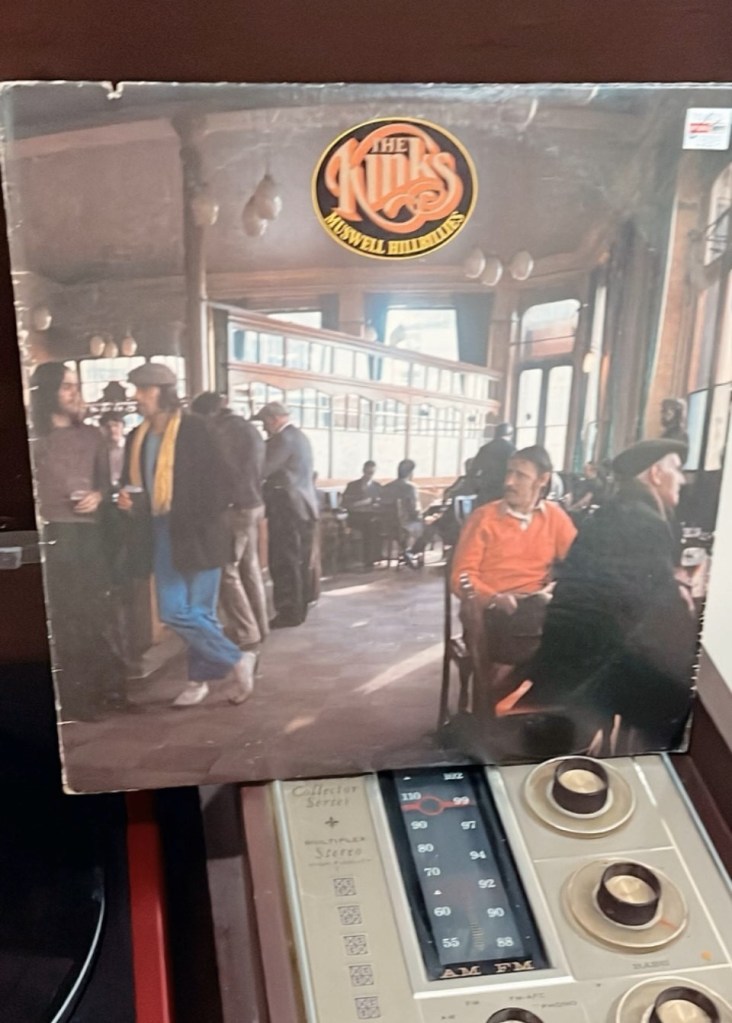
The Kinks – Musswell Hillbillies: I love the Kinks and this album was a glaring exclusion from my collection. I feel like this album is overlooked due to it’s lack of hits but it’s pretty exceptional from front to back. Also exceptional is this Bob Lefsetz piece that goes into glorious detail about the contributions John Gosling made to best era of one of London’s greatest bands.

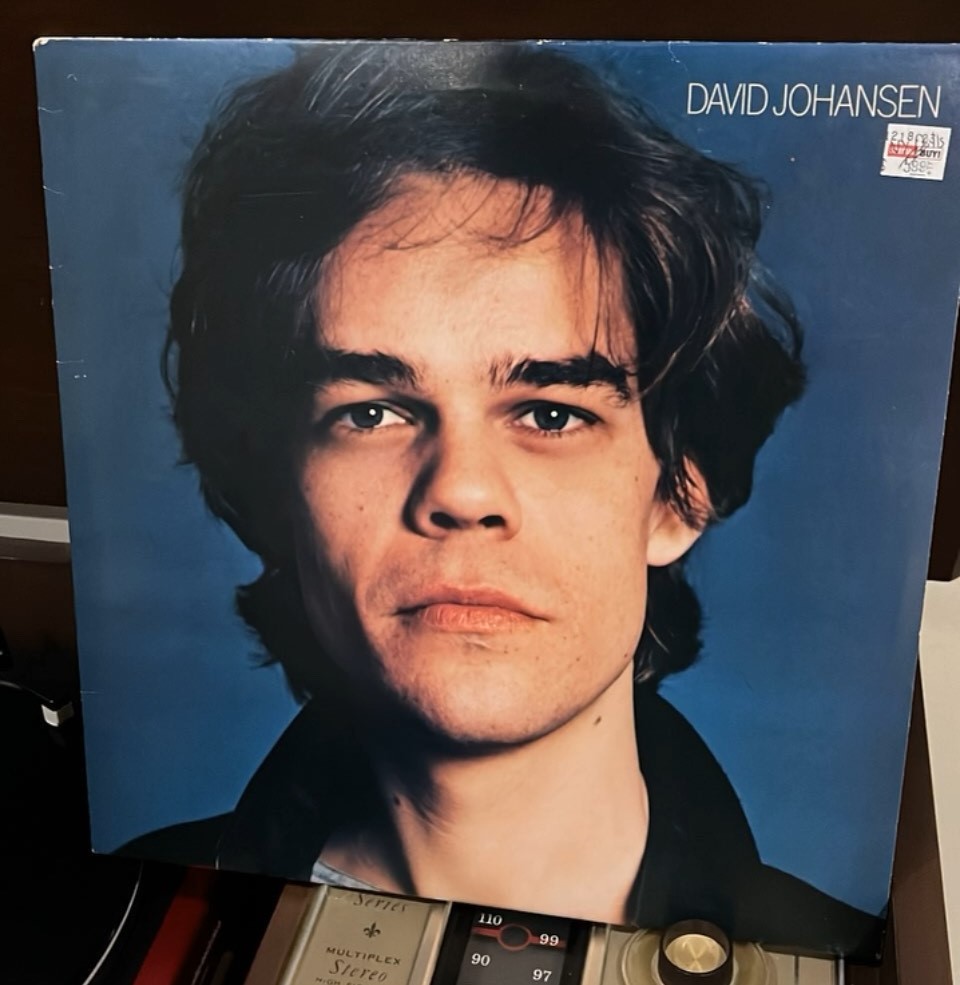
David Johansson – Self Titled: My friend Tim turned me on to this earlier in the week and I snapped it up for the sweet price of $6. From 1978, Johansen’s solo album is basically sounds like a dumbed down New York Dolls record without Johnny Thunders’ blistering solos throughout. Definitely worth your pocket change if you come across a copy in the wild.

And a couple of used books for the beach this summer: Lou Reed Growing up in Public and Rolling Stones Beggars Banquet

My family and I arrived back home early that evening and listened to records as I enjoyed a dram of distillers edition Lagavulin with my father. In the end, it was fine that I didn’t track down a man than none of us knew very well (or at all) because I was enjoying every second with the people who mean the most to me.

Effective branding enables corporate extraction and we all lose

I have been chilling by myself for the last 48 hours due to a fresh new case of covid. I feel very pent up: I want to work and I want to embrace my family. Instead I have been watching daytime, pantry-organizing, television and reading the Joan Didion book my wife bought me for Christmas. January has been a hoot which, in only 20 days, has already included a case of the flu, a case of covid, a memorial for a friend who died far too young, and the death of my uncle. Onwards and upwards, I started this morning by reading Israel Daramola’s article about the impact of the demise of pitchfork on the music industry at large.

This is emblematic of corporate America as a whole: the value is in the brand and not the product. Greed is the reason that everything that was once cool, fun, or beneficial, has become a worthless husk of its former self.

Greed is the biggest issue facing society today. I see people online wasting time lamenting the evils of capitalism in favor of virtuous socialism, and I roll my eyes. Both capitalism and socialism are mere methods of allocating resources within a population, and are no more virtuous or evil than the metric or Dewey Decimal systems. History is rife with examples of the suffering of the masses due to the pervasiveness of greed among those who hold power in socialist and capitalist economies.

What we are seeing now is the impact of Wall Street on the global economy. Since the 1970s, we have seen an increasing number of activist investors, hollowing out companies under the guise of efficiency. It’s truly viral behavior: latch onto a host company, extract the maximum value until the host is useless and is abandoned in favor of a new host.

Where we consistently fail as consumers is by being blindly loyal to brands that no longer fulfill their former promise. As a New England Patriots fan, it pains me to write this statement. The moral of this rant is to stop buying the fucking box and pay attention to the ingredients. If something sucks then don’t pay for it (as I stare at the Netflix icon on my smart TV remote). We have the ability to stem the tide of greed by speaking with our purchase dollars. Buy quality and, wherever possible, buy locally.

It’s 10am. Arsenal defeated Crystal Palace. I need to get out of my house. Will rant more later.

AI will change everything but life will be the same

Hey, AI created the featured image for this article. Could you tell? HOW?

AI has become the talk of the town universe ever since Microsoft announced that they will team up with OpenAI back in February of this year. As this game-changing merger plopped itself flat into the heart of my so-called expertise, I’ve been eagerly soaking up as much information as possible. I’m comfortable with the impending paradigm shift because I’m confident that the nut-and-bolts of my work, as well as my life outside of my employment, will not be altered dramatically.

While plenty of online discussions ponder the distant future’s ethical implications and employment landscape, specifics have been notably absent—until now. With a mere sprinkling of personal stake, I’m here to throw wild predictions into the ring. Even if my predictions turn out to be entirely wrong, my reputation within the agency realm ensures that I’ll forever remain my neighborhood’s standout moody dad, occasionally spinning Jesus and Mary Chain records at the local bar.

When I talk about the future of paid search I am really talking about the future of information gathering. AI’s seamless integration into search platforms is poised to revolutionize how users retrieve information. Let’s think about what this means—will we really navigate to www.google.com for local Pho delivery recommendations in three years, or will a super-smart app make us feel like VanderPump bar moguls by acting as a lightning fast personal assistant? It’s the latter and it will be INCREDIBLE. For about 9 months. The rush to instantly discover granular details about the most niche of interests will thrill us, but just like Woppenheimer on repeat, the novelty might wear thin after a while.

Inevitably, as users swiftly adapt to the use of AI tools, a sense of apathy might emerge, accompanied by the unsavory emergence of greed. The natural surge in search queries, facilitated by the seamless user experience of conversational search, will open up more opportunities for advertisers and platforms to generate revenue. This will lead to AI tools becoming inundated with commercial interference and paid perspectives. Consequently, users will find themselves subtly nudged towards consumer behavior, resulting in annoyance and complaints about overly targeted content. Some might even accuse AI companies of crossing boundaries with their tracking, bringing us right back to our current predicament.

Dispelling the “AI will steal jobs” myth, AI is more about transformation than an organizational upheaval. AI will level the playing field, and just like any platform, it’ll lose its sheen over time. Think Facebook or Google—they peaked and then stumbled. Remember when computers were hailed as revolutionary? As a rat-faced child witnessing my friend’s mom use Windows with a mouse blew my mind in 1995. I clearly remember marveling at the efficiency with which she could spend an entire evening playing solitaire on a flickering screen. Computers did change the world, but their introduction didn’t replace workers at scale; rather, workers integrated computers into their routines. Computers empowered workers to better do their jobs.

The truth of the matter is that there’s no enchanted solution to slashing corporate costs or skyrocketing profits. Any notion to the contrary is patently false to either stoke fear or greed within the layperson.

My final bitter truth about the future of AI is that your aunt who got scammed by a Nigerian prince in 2008 is officially fucked.  It’s a a truth that has withstood the test of time—scammers exist and by adopting AI in their schemes, will be more cunning than ever. Humans have an innate ability to sniff out bullshit but many people have allowed this skill to atrophy over the years.  Be cautious of those tall tales, dubious contacts, and photos with Photoshop gymnastics. Brace yourself for a barrage of fakery in the months and years to come.

So, if a conversation with someone selling a car over the phone feels awkward and unsettling, it might be wise to let the next call roll to voicemail. And if the supposed love of your life sports a melting face and outfits that seem to blend into the background in her profile pictures, stash your phone and grab a book. Because, in the end, the digital age might be transformative in it’s convenience, but being a human is the best guide with which to navigate this age of technology.

Remembering Dustin Pedroia’s Career as a Chill Dude (and Ball Player)

Dustin Pedroia announced his retirement from major league baseball today at age 37 after a couple years of struggling with rehabbing injuries that kept him out of the sport. At the start of my ad career, I worked with a lot of athletes from New England Sports teams which was a role that sounds fun for a young man out of college until I realized that it was not appealing. It was odd hours for low pay and working with people that I didn’t have a ton in common with outside of sports. However, of all the players I came into contact with, Dustin was the one that I got along with the best to the point where I considered him a friend.

We’re around the same age and his personality was similar to what I was used to; Dustin didn’t have a filter and was very candid and funny with his perspectives. In an industry where people are careful in what they say, Dustin really was not. Dustin didn’t hide behind masks or rhetoric or handlers and every encounter I had with him was genuine and usually funny.

We went to the 2007 AFC Championship Game between the New England Patriots and San Diego Chargers at Gillette stadium in the frigid temperatures and, though we were just sat in the lower level sideline as opposed to a private luxury box, it wasn’t until half time before anyone in our section noticed that they were sitting with the season’s MLB AL Rookie of the Year. That’s how well he blended in. When people finally noticed Dustin sitting in section 110, he was gracious and approachable; even going as far as to traverse two rows below us to take a photo with an older Sox fan.

When working on commercial shoots, I spent hours with Dustin either throwing a baseball or playing pass with a football – a part of my job was to bring things to keep the shoot “loose”. During these long stretches of downtime, Dustin would tell stories, like how his High School QB career was cut short by a Tank Johnson sack, while making me dive for long passes in khaki pants. Dustin would also get on my case about any dropped passes or errant throws; I often reminded him that sports were his job and something I mainly watched on TV.

We worked on one photo shoot in Arizona on my birthday and Dustin and his wife Kelli (an amazing person) came to the set with a cake for me. It was a cool surprise and meant a lot to me that this star athlete and his wife would acknowledge my birthday while I was out of state and away from my friends and family. 

His work ethic was second to none back then, Dustin was an early adopter of the Athletes Performance Center’s training methods and nutrition, so I know this retirement cannot have been an easy decision for him. I wish him success in whatever he chooses to do next.

My previous career as “guy who throws baseballs to Dustin Pedroia”

Me on set with Dustin Pedroia and his wife back in 2009

SEM Success in the Automation Era

The success of maximizing your investment in search to directly generate revenue clearly lies with automation for now – I’ll spare you the digression of the pathway that automation will eventually lead us to. Target return on ad spend (tROAS) has been the automation method of choice for the past 2 years; a method by which you set a ROAS goal (say 200% or every $1 you spend in advertising nets $2 in revenue) and the ad platforms will use their pre-auction signals (user data) in conjunction with the algorithm to set bids in real time based on the individual users propensity to buy.

Recently though, I have been intrigued by Budget Bid Strategies and have seen success in limited testing. Budget bid strategies focus on maximizing revenue for a specific budget rather than focusing on a set efficiency goal in tROAS which could alter ad delivery.Our concern is with the lack of control over the investment in realtime and, with the holiday season on the horizon, we are scenario planning and working with our engine reps on how we will bridge particular situations should they arise.

Stay tuned.